
The Complete Guide to Custom Fire Helmet Shields
Everything a firefighter needs to know about leather helmet fronts, covering tradition, materials, and how to order your own custom shield. Written by a firefighter who builds them by hand.
In This Guide
What Is a Fire Helmet Shield?
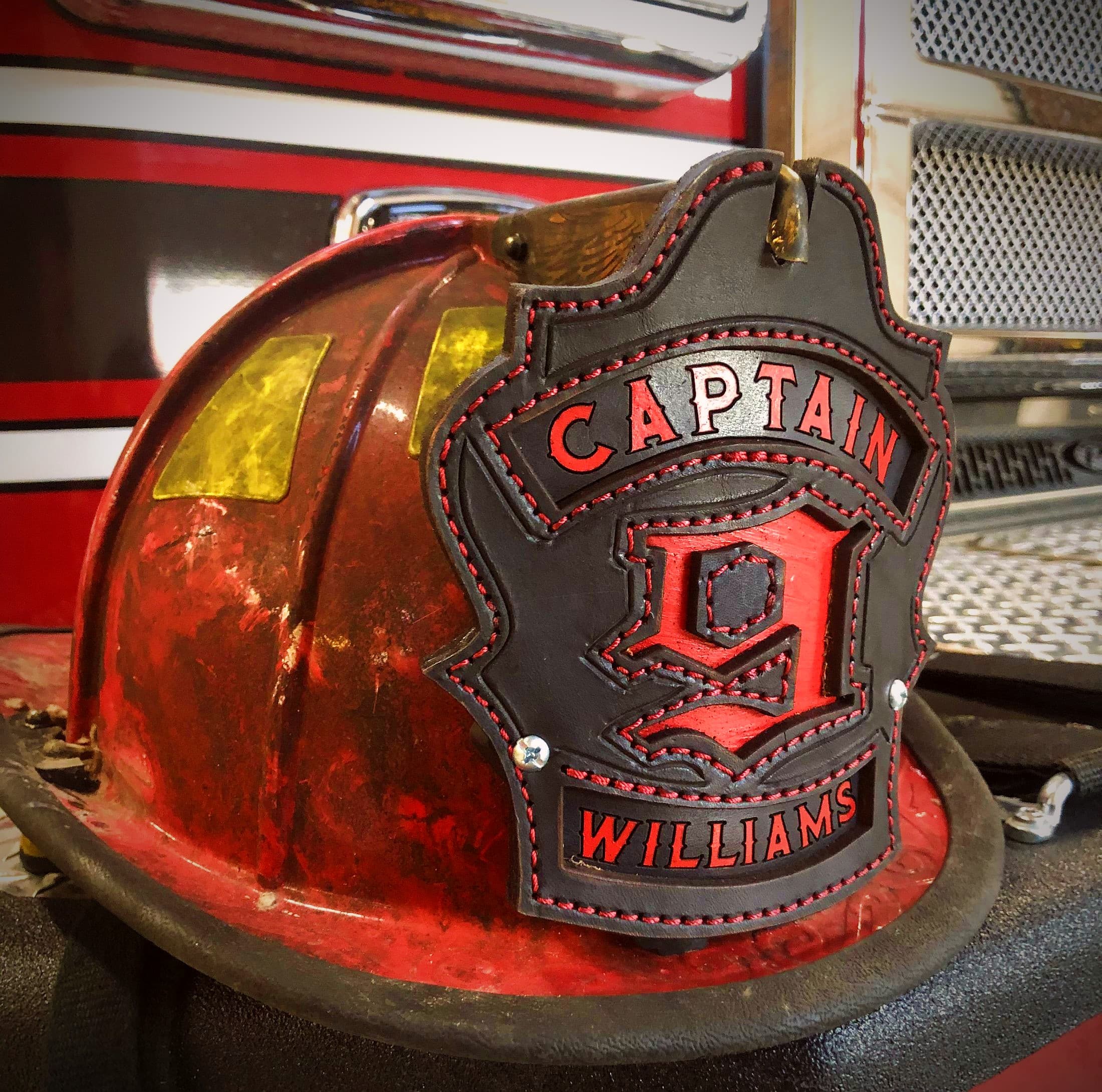
A fire helmet shield, also called a front, frontpiece, or helmet front, is the identifying piece mounted on the front of a firefighter's helmet.
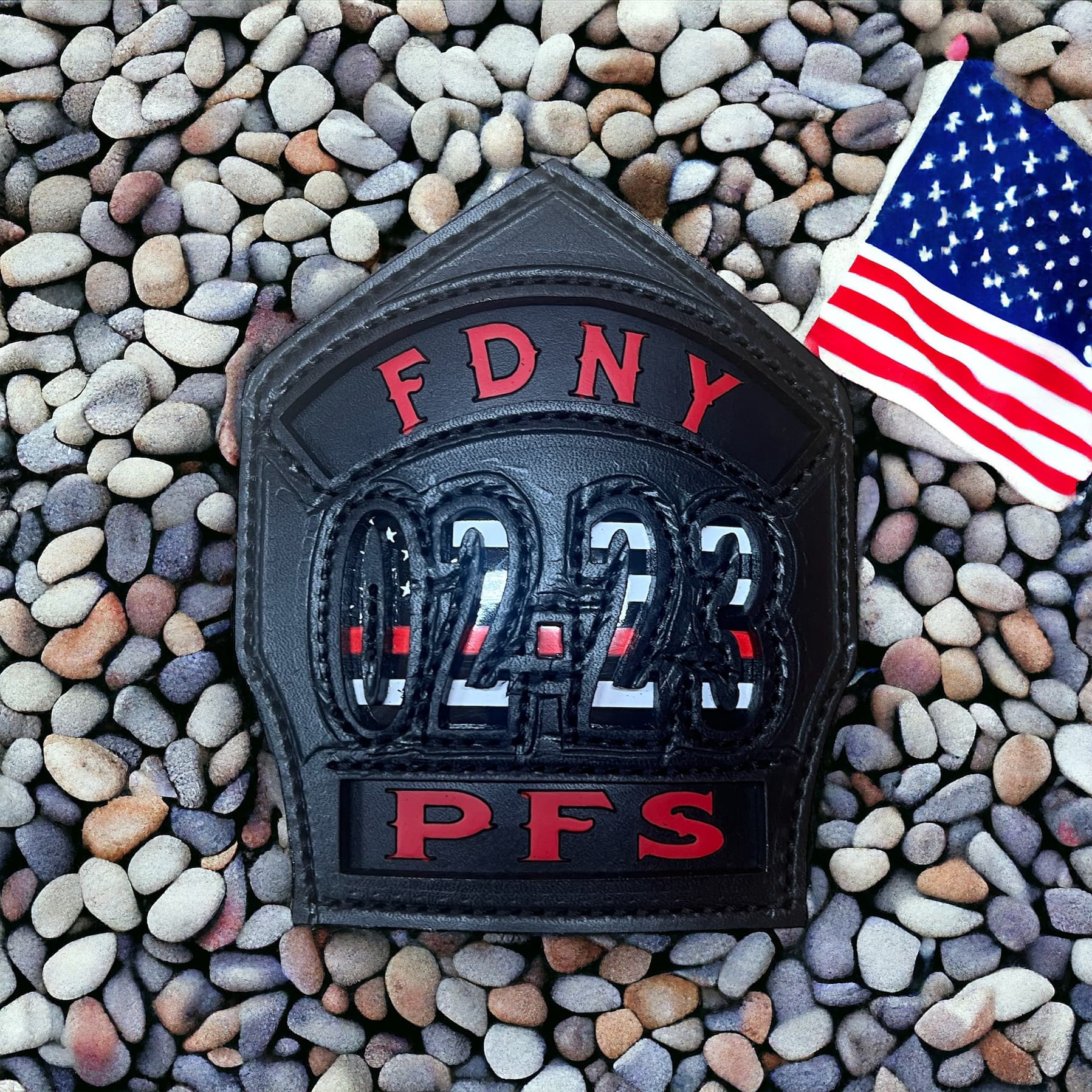
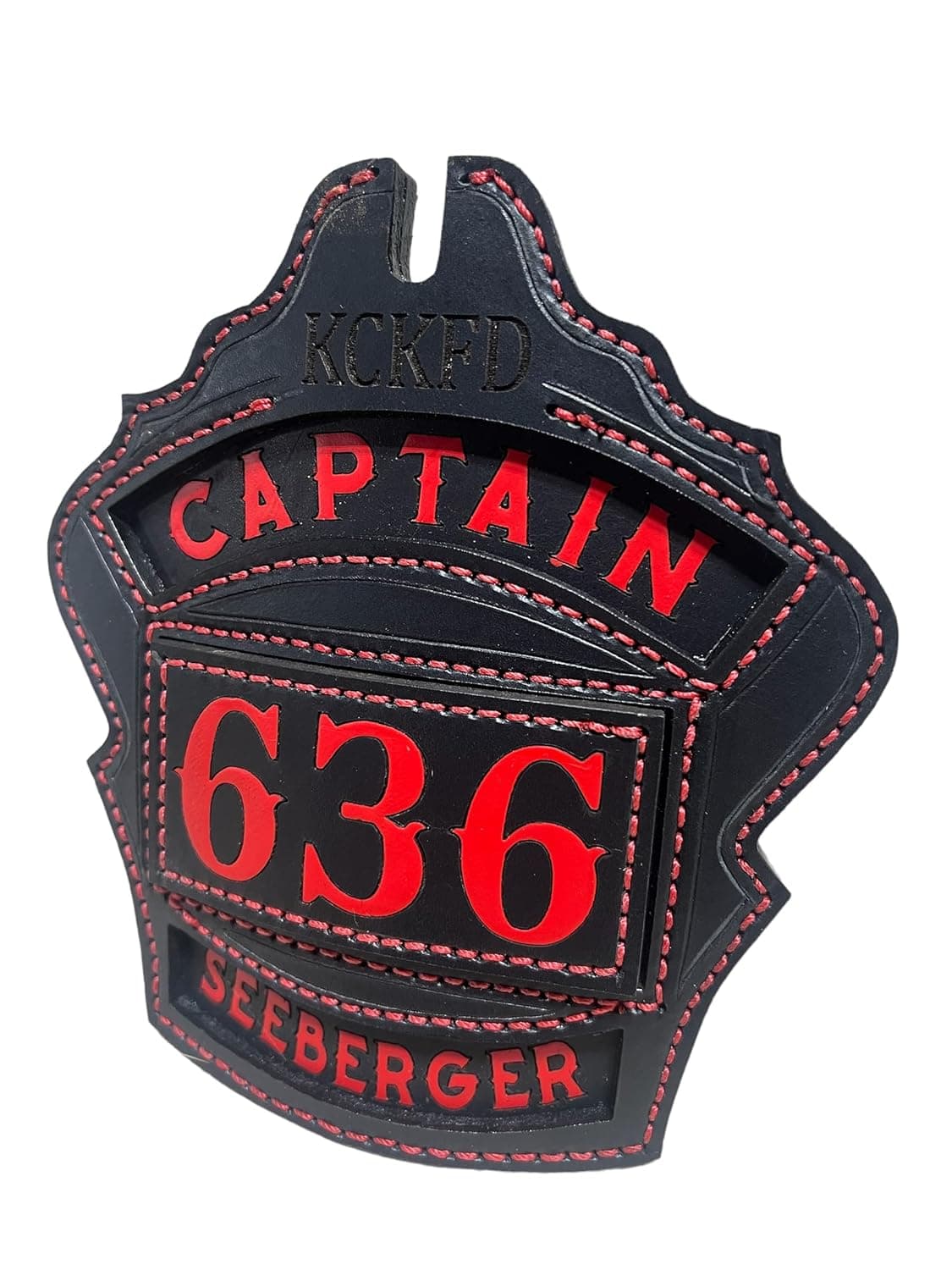
It displays the firefighter's department name, rank, badge number, and often their station or company designation. It's one of the most visible and personal pieces of gear a firefighter wears.
Shields come in different materials: stamped metal, plastic injection-molded fronts, and leather. In the American fire service, leather has been the gold standard for well over a century.
Identification
On the fireground, your shield identifies who you are. A chief arriving at a mutual aid scene can look at your front and know your department, rank, and number without asking.
Identity
Your shield represents who you are in the fire service. Your department, your rank, your number. A handcrafted leather shield is something you earn. Someone built it with their hands specifically for you.
The History and Tradition of Leather Helmet Shields
Leather fire helmets go back to the early 1800s. The first organized fire departments in cities like New York, Philadelphia, and Boston used leather helmets, and leather fronts were part of the package from the beginning.
Back then, everything about firefighting gear was leather. It was the toughest, most heat-resistant material they had access to, and it worked.
The tradition stuck. Even as helmet shells moved to fiberglass and composite materials, the leather front remained a badge of pride.
In many East Coast departments, leather fronts are standard issue. In cities like New York, Boston, and Baltimore, you won't find a single plastic shield in the firehouse. It's leather or nothing.
The tradition has spread across the country. Departments everywhere are choosing leather shields because they understand what that craftsmanship represents. When you strap on a leather front, you're connecting to over 200 years of fire service history. We've been building shields since 2013, and we've shipped to departments in every corner of the country.
Why Leather?
There are real, practical reasons firefighters choose leather shields over plastic or metal alternatives. Here's why leather has been the material of choice for over 200 years:
Heat Resistance
Leather naturally resists heat. Our shields are made from 9-ounce vegetable-tanned bridle leather, thick and dense. Built to take punishment. While plastic fronts can warp, bubble, or melt under extreme heat, leather holds its shape. We've seen our shields come back from working fires looking exactly the way they left.
Water Resistance
Vegetable-tanned leather has natural water resistance that improves as the leather develops a patina over time. Our shields hold their shape when wet. They don't sag, curl, or deform like some materials. After a heavy knockdown or overhaul in the rain, your shield looks the same.
Durability
9oz bridle leather is the same material used in saddles and heavy-duty belts. It's meant to take abuse and keep going. A well-maintained leather shield will last years on the fireground.
Appearance
There's no comparison. A handcrafted leather shield with hand-painted lettering and machine stitching has a depth and quality that injection-molded plastic simply cannot match. Leather develops character over time. It tells a story. Your shield will look as good at your retirement dinner as it did on your first day.
Customization
Every leather shield is built from scratch. That means we can do things that aren't possible with mass-produced alternatives: custom colors, layouts, special text, memorial designs, and tribute elements. If you can describe it, we can probably build it.
How Custom Leather Fire Helmet Shields Are Made
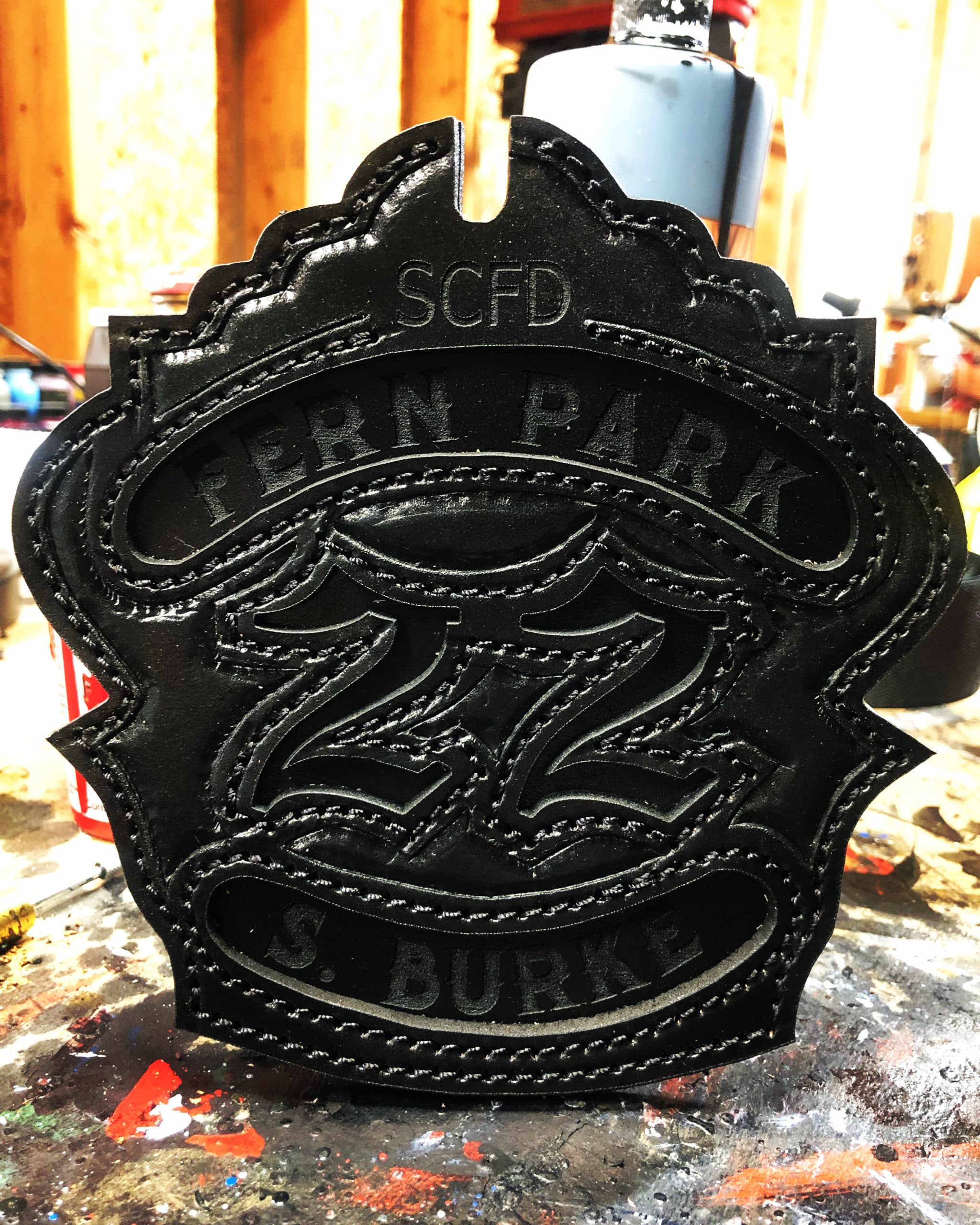
Every shield we build gets 4-5 hours of hands-on work. There are no shortcuts. Here's the process from start to finish:
- 1
Design
We start at the computer, building your design files based on your specifications. Your shield shape, department name, rank, badge number, colors, and layout are all mapped out digitally before anything touches leather.
- 2
Cut Leather from the Hide
We source our 9-ounce bridle leather from American retailers. Vegetable-tanned cowhide that's thick, firm, and built for hard use. We cut the rough pieces from a large hide, selecting sections with the best grain and consistency.
- 3
Laser Cut Each Piece
Every piece of your shield is precision laser cut: the main body, the rockers, and any layered elements. Laser cutting gives us clean, consistent edges that hand cutting can't match at this scale.
- 4
Hand Tool Details
This is where the character comes in. We use traditional leatherworking tools to add borders, texture, and decorative elements by hand. Every shield has a slightly different touch because it's done by a human, not a machine.
- 5
Laser Etch Lettering
All lettering, including your department name, rank, badge number, and any additional text, is laser etched into the leather. This creates a permanent impression in the surface that won't fade, peel, or rub off like printed or applied lettering.
- 6
Hand Paint
Every letter, number, and detail is hand painted with durable leather paint. We use the customer's chosen colors and take our time to get clean, crisp results. This step alone can take over an hour on a detailed shield.
- 7
Machine Stitch
All layers are stitched together on a Cobra Class 3 heavy-duty sewing machine. This is an industrial leather machine built for thick materials, the same type used by saddle makers and holster builders. The stitching is functional (it holds everything together) and decorative (the color you choose becomes part of the design).
- 8
Sand and Paint Edges
Every edge is hand sanded smooth, then painted with edge paint for a clean, sealed finish. This protects the leather from moisture wicking in through the edges and gives the shield a professional look from every angle.
- 9
Quality Check
Before anything gets shipped, we inspect every detail. Lettering accuracy, paint quality, stitch consistency, edge finish, and overall fit. We don't send out anything we wouldn't put on our own helmet.
- 10
Ship
Every fire helmet shield ships free within the United States. We package each shield carefully to arrive in perfect condition.
Want to see your shield take shape? Try our interactive Shield Builder.
Open Shield BuilderCustomization Options
Because every shield is built from scratch, customization is unlimited. Here are the standard options you'll choose when ordering:
Shield Shape
We offer multiple shield styles including the Classic, Crew, Kingpin, Galt, Antique, Passport, Titan, and more. Each shape has a different look and feel, ranging from traditional and compact to modern and commanding. Browse all shield styles.
Leather Color
Choose from Black, Dark Brown, Red, or White. Each color is dyed into the leather, not painted on, so it won't chip or peel.
Lettering Color
We offer 11 lettering colors: Black, White, Red, Gold, Silver, Green, Blue, Yellow, Orange, Pink, and Purple. Every letter is laser etched and hand painted for permanence.
Stitching Color
Choose from Red, Black, White, Yellow, Silver, Gold, or Blue thread. The stitching is a visible design element, so pick a color that complements your leather and lettering choices.
Text Lines
Standard shields include a top rocker (department name), center text (badge number), rank, and bottom rocker (name, station, etc.). The exact layout depends on the shield style.
Optional Outline
Add a contrasting outline around your lettering for extra visibility and a distinctive look.
Choosing the Right Shield Style
With multiple shield shapes to choose from, here's a quick guide to help you decide:
The Classic
Our most popular style and a traditional shield shape that looks right at home on any helmet. If you're not sure which to pick, start here.
The Crew
A clean, modern look that's great for departments wanting a consistent, sharp appearance across the crew.
The Kingpin
A bold, oversized shield that makes a statement. Popular with officers and anyone who wants maximum presence on the fireground.
The Galt
A unique shape that stands out from traditional designs. It's a great pick for departments that want something different.
The Antique Shield
Captures a vintage fire service aesthetic with an old-school silhouette that nods to the history of the job.
The Legacy Passport
A passport-style front, the classic look you see on traditional leather helmets, especially on the East Coast.
The Titan
Our largest shield style. Commanding, prominent, and hard to miss. Built for firefighters who want maximum impact.
Not sure which one is right for you? Use our Shield Builder to preview different shapes with your department's colors and text.
Sizing and Helmet Compatibility
We build shields to fit ALL major helmet brands and models:
Cairns
1010, 1044, N5A, N6A
MSA
All current models
Phenix
TL-2 and others
Bullard
Traditional and modern
Morning Pride
All models
Honeywell
All models
Shields mount using your helmet's built-in mounting system. The existing bracket, clips, or posts that your helmet already has. No modifications needed.
Three Standard Sizes
We offer shields in 6", 6.25", and 6.75". The right size depends on your helmet model and shield style. Check our Shield Size Guide for specific recommendations, or contact us if you're not sure.
Care and Maintenance
Leather is a tough material, but a little care goes a long way.
After Heavy Use
Wipe down with a dry or slightly damp cloth to remove soot, dirt, and debris. Let it air dry completely.
Conditioning
Apply a leather conditioner every few months to keep the leather supple. A thin coat is plenty.
Storage
Store your shield flat or mounted on your helmet. Avoid storing in direct sunlight for extended periods.
What NOT to Do
No harsh chemicals, solvents, or abrasive cleaners. Don't soak in water. Don't use a heat gun or hair dryer.
For a deeper dive, check out our full Leather Shield Care Guide.
Ready to Build Your Shield?
Design your custom leather fire helmet shield with our interactive builder. Choose your shape, colors, and text with a live preview.
Related Guides
Frequently Asked Questions
Custom leather fire helmet shields typically range from $120 to $200 depending on the shield style, complexity, and any special requests. All shields from Fire Helmet Shields include free shipping within the United States.
Our standard production time is approximately 21 business days. Each shield is handcrafted to order, so every shield gets 4-5 hours of hands-on work. We don't mass produce. We keep you updated throughout the process.
Yes. Our interactive Shield Builder lets you choose your shield shape, leather color, lettering color, stitching color, department name, rank, badge number, and more with a live preview. You see exactly what you're getting before you place your order.
We make shields to fit ALL major helmet brands including Cairns (1010, 1044, N5A, N6A), MSA, Phenix TL-2, Bullard, Morning Pride, and Honeywell. Shields mount using your helmet's built-in mounting system. No modifications needed.
In the fire service, 'shield,' 'front,' and 'frontpiece' all refer to the same thing. It's the decorative and identification piece mounted on the front of a fire helmet. We use these terms interchangeably.
Absolutely. We've done 100+ shields for departments across the country. Bulk orders get the same individual attention. Every shield is still handcrafted one at a time. Contact us at firehelmetshields@gmail.com for department pricing.
Leather helmet shields are a longstanding tradition in the fire service. They are designed to mount using your helmet's existing mounting system and do not modify the helmet's structure. Check with your department's SOPs regarding frontpiece requirements.
Yes. Memorial shields, retirement shields, and tribute shields are some of the most meaningful pieces we build. These can include special dates, service years, crossed axes, and other commemorative elements. Contact us to discuss your vision.