
Leather vs Metal Fire Helmet Shields: An Honest Comparison
An honest comparison between leather and metal fire helmet shields from a Captain who has used both. Durability, weight, customization, heat resistance, and which is right for you.

Brian Williams
Captain, KCKFD · Owner, Fire Helmet Shields
I get asked this question all the time: should I get a leather shield or a metal shield? As a Captain at KCKFD who has used both and now builds leather shields for a living, I am going to give you the honest answer.
Both have their place. Here is how they actually compare.
Durability
Leather: Premium 9-ounce vegetable-tanned bridle leather is extremely tough. It is the same weight of leather used in saddles and heavy-duty belts. A well-made leather shield will last an entire career. It develops character over time rather than deteriorating. Mine are built from two layers of leather, machine stitched on a Cobra Class 3.
Metal: Metal shields (typically aluminum or stainless steel) are rigid and resist bending. However, they can dent on impact, and painted finishes chip and scratch over time. Once the paint chips, it is hard to touch up cleanly.
Verdict: Both are durable. Leather develops character. Metal shows wear as damage.
Heat Resistance
Leather: Vegetable-tanned leather naturally resists heat. It holds its shape under fire conditions where plastic shields warp, bubble, or melt. Leather has been used on the fireground for over 200 years because it works.
Metal: Metal conducts heat. In high-heat environments, a metal shield can get hot enough to be uncomfortable or even brand you through your helmet. The paint can also blister in extreme heat.
Verdict: Leather handles heat better in real-world fireground conditions.
Weight
Leather: A two-layer leather shield is lighter than a comparable metal shield. Over a long shift, every ounce on your helmet matters.
Metal: Heavier. Some metal shields are noticeably heavier, which can affect helmet balance during extended operations.
Verdict: Leather wins on weight.
Customization
Leather: Fully customizable. Leather color (black, dark brown, red, white), lettering color (11 options), stitching color (7 options), and any text you want. Laser etching allows precise, detailed lettering. My Shield Builder lets you preview your design with a live preview before ordering.
Metal: Customizable through engraving, etching, or paint fill. Some metal makers offer colored enamel fills. Generally fewer color options than leather.
Verdict: Leather offers more customization options. Metal offers a different aesthetic.
Tradition and Appearance
Leather: Leather fire helmet shields have been part of the American fire service since the 1800s. There is a tradition and heritage to leather that metal simply does not carry. A leather shield on a leather helmet is the classic look of the American firefighter.
Metal: Metal shields have a clean, modern look. Some departments and regions prefer the metal aesthetic. FDNY-style departments often use metal shields.
Verdict: This comes down to department culture and personal preference.
Cost
Leather: Custom leather shields typically range from $80-$145 depending on style and complexity. All of my shields include free shipping.
Metal: Custom metal shields typically range from $50-$200+ depending on material and finish. Stainless steel and specialty finishes are at the higher end.
Verdict: Comparable pricing. You get what you pay for with both.
My Recommendation
If you want a shield with tradition, character, and the classic fireground look, go leather. If your department standardizes on metal or you prefer that aesthetic, go metal. Both are real shields made by real craftspeople.
What I would avoid is cheap plastic or patent leather shields from overseas. Those are the ones that melt, warp, and fall apart. Whether you choose leather or metal, buy from a maker who stands behind their work.
If you want to see what a handcrafted leather shield looks like, check out the gallery or build your own in the Shield Builder.
Keep reading
All posts →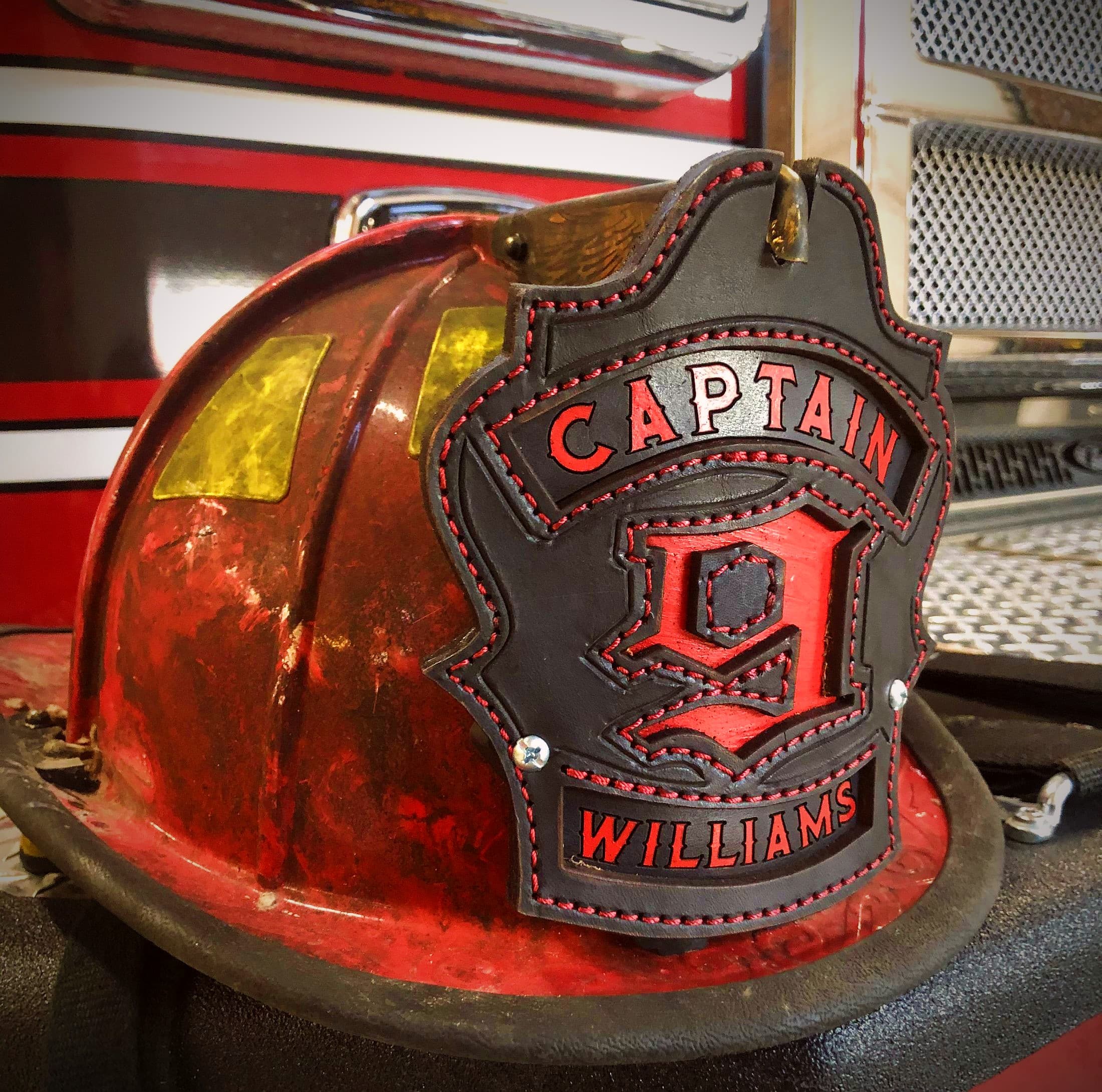
How to Choose the Right Shield Shape for Your Helmet
From The Classic to The Titan, learn what makes each shield shape unique and which one fits your style and department best.
How to Mount a Fire Helmet Shield: Step-by-Step Guide
A step-by-step guide to mounting a leather fire helmet shield on Cairns, MSA, Phenix, Bullard, and Morning Pride helmets. Written by the guy who builds them.
Which Fire Helmet Shield Should I Get? A Buyer's Guide
Not sure which custom fire helmet shield style is right for you? Here is a breakdown of every shield I build, who it is for, and how to choose.