
Fire Helmet Shield Ideas: What to Put on Yours
Stuck on what to put on your fire helmet shield? A 25-year fire captain walks through every rocker, every rank, and the 7 shield mistakes I see most on the fireground. With real layouts, examples, and design guidance.
Brian Williams
Captain, KCKFD · Owner, Fire Helmet Shields
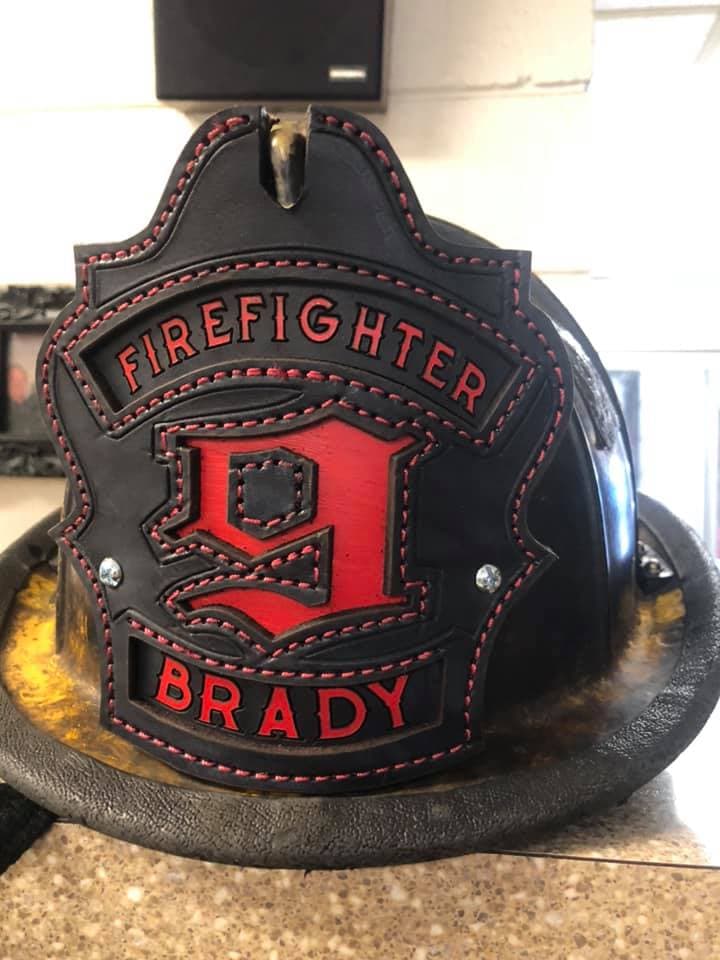
If you're staring at a blank helmet shield and don't know what to put on it, you're not alone — it's the single most common question I get from new firefighters and from family members ordering shields as gifts. The short version: your fire helmet shield should carry your department or city on the top rocker, your company number or rank in the center, and your last name on the bottom rocker. That's the traditional layout, and it works for 90% of firefighters.
But "should" is doing a lot of work in that sentence. Different ranks call for different details. Some departments have rules. Some traditions are universal, some are regional. And there are a handful of shield-design mistakes I see on the fireground that look bad on day one and worse after five years of duty wear.
I'm Brian Williams. I've been on the job at Kansas City, Kansas Fire Department for 25 years, and I've been making leather fire helmet shields out of my shop since 2013. This post is what I wish someone had told me when I was a probie staring at a shield order form for the first time. Real layouts, real ideas by rank, and the design choices I'd actually make if I were ordering my own shield today.
How a Fire Helmet Shield Is Laid Out
Every traditional leather fire helmet shield is built on a three-zone layout: top rocker, center, and bottom rocker. "Rocker" is fire-service slang for the curved banner-shaped sections at the top and bottom of the shield. They're called rockers because they look like the rockers on a chair. On most shield shapes — the Crew, the Solo, the Passport, the Kingpin, the Classic — these three zones are clearly defined by stitching or by leather cutouts.
Some shield shapes have a fourth element: a banner across the middle, a department badge inside the center, or an eagle on top. Those are stylistic flourishes. The three core zones are what you need to plan first.
If you want a deeper anatomy walkthrough, see our shield anatomy guide. For sizing, see our shield size guide.
What Goes in the Top Rocker
The top rocker is where your department or city goes. This is the most consistent convention in the American fire service — almost every shield I make has it.
Common formats I stamp into top rockers:
- City + "FIRE" — "Kansas City Fire," "Austin Fire," "Boston Fire"
- City + "FD" — "Tulsa FD," "Mesa FD," "Reno FD"
- Acronyms for famous departments — "FDNY," "LAFD," "PFD" (Philadelphia or Phoenix)
- County departments — "Montgomery County," "Fairfax County FRD," "MCFRS"
- Volunteer/rural departments — Department name spelled out: "Donahoo Township Fire," "Cedar Creek VFD"
If your department has a long name, abbreviate. The top rocker has a hard character limit — typically 18-22 characters — and a long name jammed in there at small font is hard to read at 20 feet, which is the distance the rocker actually has to be readable from on the fireground.
Battalion or division designators also work in the top rocker if your department uses them: "BATTALION 8" or "DIVISION 3."
What Goes in the Center
The center is where you have the most freedom. The traditional center fills are:
- Company number — "12," "4," "7" — the most common center fill, especially for engine and ladder companies
- Company designator + number — "ENG 12," "LAD 4," "RES 1," "SQD 5"
- Rank initials — "FF" (firefighter), "DR" (driver/engineer), "LT," "CAPT," "BC," "DC"
- Bugles — for officers, a bugle pattern in the center signals rank (1 bugle = lieutenant, 2 parallel = captain, 2 crossed = battalion chief, 3-5 = chief)
- Monogram or initials — first and middle initial as a personal mark
- Maltese cross — the universal firefighter symbol, often centered with a number inside
- Department badge or logo — for departments with strong visual identity
If you're a probie, line firefighter, or engineer, your company number in the center is the cleanest, most traditional choice. If you're an officer, the bugle pattern is what most senior firefighters expect to see — see our guide to bugles for details on bugle conventions.
What Goes in the Bottom Rocker
The bottom rocker is your last name. That's the convention. In all caps, in a clean serif font that reads from across the apparatus floor.
Variations I see and stamp regularly:
- Last name only — "WILLIAMS," "MARTINEZ," "O'BRIEN" — the cleanest, most traditional choice
- First initial + last name — "B. WILLIAMS," "J. MARTINEZ" — useful in departments with multiple firefighters who share a last name
- Nickname — "RED DOG," "DOZER," "THE COLONEL" — earned, not chosen
- Last name + badge number — "WILLIAMS 247," "MARTINEZ 19"
- Years of service (retirement shields) — "1999-2024" or "25 YEARS"
One rule I'll be direct about: if you go with a nickname, make sure it's actually one your crew calls you. A nickname you self-assign and stamp into your shield without it being earned at the house is the fastest way to get roasted on shift. Trust me.
Fire Helmet Shield Ideas by Rank
Different ranks call for different shield designs. Here's how I'd lay out a shield for each rank in the American fire service.
Probie / Recruit Helmet Shield Ideas
If you're a probie, keep the shield simple. Top rocker: department. Center: company number (if assigned) or just "FF." Bottom rocker: last name. Black leather, white or red lettering. No bugles, no flair, no maltese cross overlay. The plainer the shield, the more it telegraphs that you know your place — and senior firefighters notice that.
One specific recommendation: order a shield after you graduate the academy and have your station assignment, not during academy. Probies who order shields with their academy class number on them sometimes have to redo them after they hit a real house. Wait until you have your engine or ladder number, then order. See our probie helmet shield page for examples and probie-specific designs.
Firefighter Helmet Shield Ideas
For a line firefighter, the standard layout is the right call: department on top, company number in the center, name on the bottom. This is what 60-70% of the shields I ship look like, and there's a reason — it's clean, it's traditional, and it doesn't scream for attention.
If you want a small upgrade without breaking convention: a maltese cross or eagle stamped behind the company number adds depth without changing the layout. Or do white lettering on black leather instead of red — it reads as more formal and ages beautifully. Browse our custom shield collection for layout examples.
Engineer / Driver Helmet Shield Ideas
Engineers and drivers (the firefighters who operate the apparatus and pumps) often add "ENG" or "DR" to their shields. A common layout: top rocker "DEPARTMENT," center "ENG 12" or "DR" with the company number, bottom rocker "LAST NAME." Some engineers also add a small wheel or pump symbol — fine if your department culture supports it, skip it if you're new to the company.
Lieutenant Helmet Shield Ideas
Lieutenant shields signal rank with one bugle in the center, traditionally horizontal. Layout: top rocker department, center single bugle (often with the company number under or beside it), bottom rocker last name. Red leather is common for lieutenant shields in some regions, black in others — depends on department convention.
If you've just been promoted, order the shield about six weeks before the ceremony to be safe. See our lieutenant helmet shield page for ceremony-ready examples and the layouts most newly promoted LTs go with.
Captain Helmet Shield Ideas
Captain shields use two parallel bugles in the center to signal rank. The traditional layout has the bugles horizontal, side by side, with the company number stamped beneath them. Some captains opt for white leather to set the rank apart visually from the crew; others stay with black or red to match the rest of the company.
Captain shields are also where I see the most personalization — a captain has earned the right to make their shield distinctive. Adding a small department logo, a battalion number, or even a Latin motto on the bottom rocker is acceptable at this rank. See our captain helmet shield page for examples.
Battalion Chief Helmet Shield Ideas
Battalion chief shields use two crossed bugles in the center. Top rocker: department. Bottom rocker: last name. The crossed-bugle layout is its own statement — most BC shields don't need a battalion number on top of that, since the crossed bugles already signal "this person commands a battalion."
White leather is common at BC level. So is gold paint for the lettering instead of standard red or white. The shield should look more formal than a line firefighter's, because it'll be photographed at every promotion ceremony, retirement, and command-staff group photo for the rest of the career.
Assistant Chief / Deputy Chief / Chief Helmet Shield Ideas
Chief-level shields use three to five bugles in a fan or trumpet pattern, depending on the rank. Most chief shields are white leather with gold or silver lettering. Some departments allow gold-leaf lettering for fire chief-level shields, which is a true ceremonial finish.
For a fire chief shield, the design philosophy shifts: this shield is more ceremonial than tactical. It'll be worn for parades, funerals, swearing-in ceremonies, and very few real fires. Lean into the ceremonial look. See our chief helmet shield page for examples.
Retirement Shield Ideas
A retirement shield is a different kind of shield. It's not for duty wear — it's a keepsake. The bottom rocker swaps out the last name for the years of service ("1999-2024" or "25 YEARS"). Some retirement shields add the firefighter's first and last name in the center. Some keep the rank bugles. Some add a small American flag, the department badge, or a Latin "semper fidelis"-style motto.
Retirement shields are most often ordered by the crew or the department as a gift for the retiring firefighter. If you're ordering one, talk to the crew first — they probably have a specific layout idea or wording they want. See our retirement shields page for layouts that work.
Color Conventions on Fire Helmet Shields
Shield color isn't random in the fire service. There are loose national conventions that most departments follow, and tighter local conventions that vary by city.
The most common color codes:
- Black shield — Line firefighter, the universal default
- Red shield — Lieutenant or captain in many departments; also used for engine companies in some regions
- White shield — Chief officer (BC, DC, AC, Chief) in most departments
- Yellow shield — Probie or new firefighter in some departments (matches the yellow probie helmet color)
- Orange shield — Specialty unit in some departments (rescue, hazmat) — uncommon
The color codes tie back to helmet color conventions, which I cover in detail in our firefighter helmet colors guide.
One thing to check before you order: your department's Standard Operating Guidelines (SOGs). Some departments — especially career departments in larger cities — have specific shield-color requirements written into the SOG. If your department says line firefighters wear black shields, ordering a custom red one is going to get you a conversation with your captain on day one. When in doubt, ask.
Traditional vs. Modern Shield Designs
There's a quiet ongoing debate in the fire service about traditional vs. modern shield designs. Here's how I'd frame the difference:
Traditional shields use serif fonts (the kind of lettering you'd see on a Civil War-era helmet), red and white as the dominant colors, hand-painted lettering, and classic shapes like the Crew, the Solo, or the Passport. The look is "I'm part of a 200-year tradition."
Modern shields use cleaner sans-serif fonts, blacked-out color schemes (black leather, black lettering, sometimes called a "tactical" or "blackout" shield), and minimalist shapes. The look is "I'm a working firefighter in 2026, not a costumed reenactor."
Both are legitimate. My personal preference is traditional — I think a fire helmet is one of the few pieces of professional gear that benefits from looking like its own history. But if you want a blackout shield because that's how your crew runs, do it. The shield is yours, not mine. See both styles in our shield collection.
Special-Occasion Shield Ideas
Some shields are made for specific moments. The conventions are different from a duty shield.
Memorial Shields
Memorial shields honor a fallen firefighter, usually from your department or company. The most common layout: top rocker "IN MEMORIAM," center the firefighter's name and dates of service, bottom rocker the department. Memorial shields are often hung in the station house, not worn — though some departments wear them on memorial detail.
Promotion Shields
A promotion shield is the new shield you wear after being promoted to a new rank. The convention is to retire the old shield (the crew often signs the back of it as a keepsake) and wear the new one starting on your first shift in the new rank. Order it 4-6 weeks before the ceremony. See our promotion gifts page for ideas.
Fire Academy Graduation Shields
For a recruit graduating from the academy, a custom shield with the academy class number is a tradition in many departments — though as I mentioned earlier, I usually recommend waiting until station assignment to order. If you're ordering as a gift for a graduating firefighter, a shield blank (unlettered) lets the new firefighter customize it once they have their company assignment. See academy graduation gift ideas.
Family Legacy Shields
Multi-generation firefighter families sometimes commission shields that honor the lineage — "WILLIAMS — Father, Son, Grandson — Three Generations." These are display shields, not duty shields. The detail and craftsmanship matter more on these because they get passed down.
7 Fire Helmet Shield Mistakes I See on the Fireground
After 12+ years of making shields and 25 years of standing next to firefighters wearing them, here are the design choices I see go wrong most often.
1. Cramming Too Much Text
The shield is small. The fireground is loud and chaotic. If your shield has six lines of text in a 4-inch space, none of it is readable. Pick three things — department, company, name — and stamp them at a size that reads from 20 feet. That's the test.
2. Picking a Font That Doesn't Belong on Leather
Olde English on a duty shield looks like a heavy metal band logo. Comic Sans-style scripts read as juvenile. Stick to traditional serif fonts (Cambria, Blue Ridge) or clean sans-serif (Octopus Bold) for duty shields. Save the decorative fonts for retirement shields where the look is more ceremonial.
3. Choosing a Color Combo That Disappears at Night
Black leather + dark blue lettering = invisible at 2 AM on a working fire. White or red lettering on black leather is the readable combo. Test your design by looking at it in dim light before approving the order.
4. Self-Assigned Nicknames
Already covered above, but worth repeating: don't put a nickname on your shield unless your crew actually calls you that.
5. Skipping the SOG Check
Order the shield, get to your first shift in it, and find out your department prohibits red leather for line firefighters. Now you've got a $150 paperweight. Five minutes of asking the captain saves the headache.
6. Going Cheap on Materials
A printed plastic or stamped aluminum shield looks fine in the photo. After two months of duty wear — heat, water, soot, getting dragged across drywall during overhaul — it looks beat. Real leather shields develop character; plastic shields just get ugly. We cover the leather-vs-plastic comparison in detail in our leather vs plastic shields guide.
7. Ordering at the Last Minute
A custom shield takes time to make right. Standard production at our shop is approximately 21 business days; bulk orders take longer. If your promotion ceremony is in 10 days and you haven't ordered yet, you're in rush territory. Plan ahead, or use our rush production option if you have to.
Shield Sizing and Material Notes
Quick reference, since these are the questions that come up at the order stage:
- Standard sizes — 6", 6.25", and 6.75" measured point-to-point at the widest part. The 6" fits 90% of modern fire helmets. Older Cairns N6A Leatherheads usually take 6.25" or 6.75".
- Material — Premium 9oz vegetable-tanned bridle leather is the standard for duty wear. Holds up under heat, sheds water, ages well.
- Mount — All major helmet brands (Cairns 1010/1044/N6A, MSA, Phenix TL-2, Bullard, Honeywell Morning Pride, Pacific) use existing built-in shield mounts. No drilling or modification needed.
For the full sizing breakdown, see our shield size guide. For care and maintenance after you have the shield, see our shield care guide.
Frequently Asked Shield Design Questions
What is the most common fire helmet shield layout?
Top rocker with the department name or city, center with a company number or rank designator, and bottom rocker with the firefighter's last name. This three-zone layout covers the vast majority of duty shields in the American fire service.
Can I put a logo or department badge on my shield?
Yes. Department badges, maltese crosses, eagles, and small custom artwork can be added to the center or as overlays. Send us a reference image at firehelmetshields@gmail.com and we'll work with you on placement.
What should a probie put on their shield?
Department on top, "FF" or company number in center, last name on bottom. Black leather, white or red lettering. Wait until station assignment before ordering — academy class numbers don't always survive the move to a real company.
Do I need bugles on my shield if I'm an officer?
Bugles aren't legally required, but they're the universally recognized rank designator in the American fire service. Most senior firefighters expect them on an officer's shield, and skipping them comes across as either a mistake or a statement. If you're an officer, use the bugles.
How long does a custom fire helmet shield take to make?
Standard production at Fire Helmet Shields is approximately 21 business days from order confirmation. Rush production with a 5-day guarantee is available for an extra fee — useful for promotion ceremonies, academy graduations, and retirement events with a hard deadline.
Can my whole crew get matching shields?
Yes — bulk department orders are one of our specialties. We've made matched sets for engine companies, ladder companies, recruit classes, and entire battalions. Contact us via our department orders form for pricing on 5+ shields.
Design Yours in About Two Minutes
If you have a layout in mind, the fastest way to see it on a real shield shape is our shield builder. Pick the shape (Crew, Solo, Passport, Kingpin, Classic, etc.), pick the leather color, type your text into the rockers, and the builder shows you the shield in real time before you order.
If you'd rather skip the design step and pick a shield I've already laid out, browse our custom helmet shield collection. The Crew, the Classic, and the Solo are the three best-selling shapes — they cover most layouts and most departments.
Every shield in our shop is hand-cut, laser engraved, paint-filled, and saddle-stitched by working firefighters in our Kansas City shop. No printing, no overseas labor, no shortcuts. The same shield I make for a brother at my house is the one I ship to you.
Got a design question I didn't cover here? Email me at firehelmetshields@gmail.com — I read every one. And if you're ordering a shield as a gift for a firefighter in your life, our firefighter gifts hub has more guidance on what to order, when to order it, and how to make sure it arrives in time.